Your Morning Coffee May Be Doing More Than Waking You Up

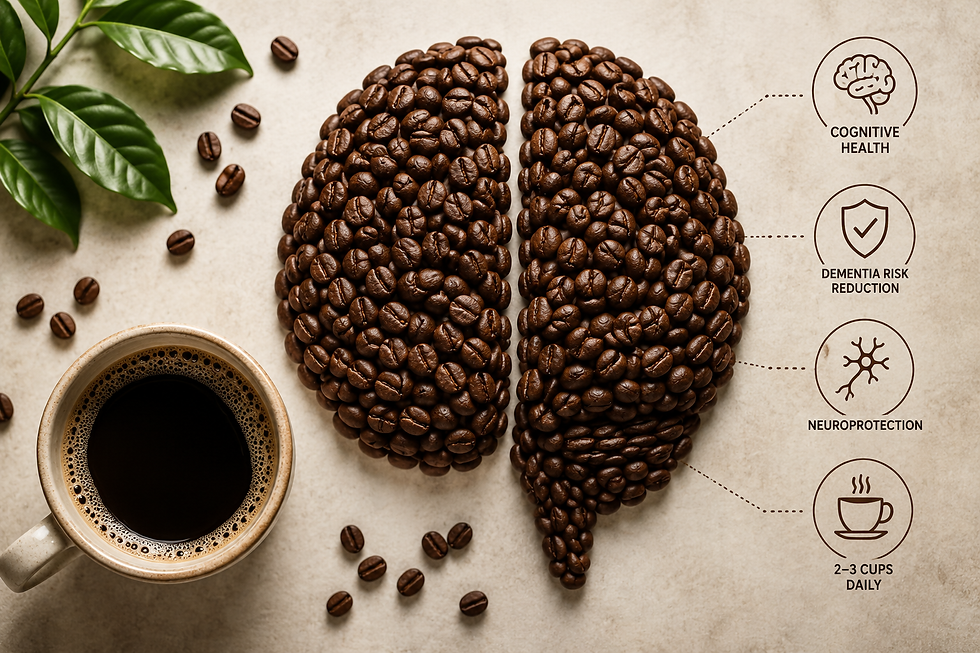
Coffee lovers, I have some exciting news. A recent study involving 131,821 adults tracked over as long as 43 years found that people who regularly drink 2–3 cups of coffee per day were less likely to develop dementia compared to those who drank little or no coffee. As someone who joined the coffee scene later than most, I find that reassuring — better late than never.
The study, published in JAMA, found that higher caffeinated coffee intake was associated with a lower risk of dementia and slightly better cognitive performance over time. If you want to read more about it, here’s the study summary from JAMA Network:https://jamanetwork.com/journals/jama/article-abstract/2844764
It reminds me of foods like steak and eggs. Remember when those were considered terrible for us? Now the conversation looks very different. Coffee has been through the same cycle more than once. Long before our time, coffee was even considered controversial and “sinful” by some religious leaders in 16th-century Europe. Over the years, it has been blamed for everything from heart disease to cancer. Many of us grew up hearing that coffee would stunt our growth, and later we were told it caused dehydration — despite current research showing coffee can contribute to daily fluid intake.
Will the pendulum swing the other way again someday? Maybe. But for now, I’ll live in the present and appreciate the cognitive benefits this study suggests.
Of course, studies like this show association rather than absolute proof that coffee prevents dementia. Lifestyle factors such as exercise, diet, sleep, and overall cardiovascular health still play a major role. Still, the findings are encouraging, especially since the benefits appeared strongest with moderate coffee consumption — about 2–3 cups per day — rather than excessive intake. The study also suggested the strongest benefits were linked to caffeinated coffee specifically, not necessarily decaf.
And if better cognitive health isn’t enough to convince you, there’s also the performance side of things. Caffeine is one of the most researched performance enhancers in the world, with studies showing benefits such as improved endurance, increased power output, delayed fatigue, and greater fat oxidation during exercise. Other evidence-based associations linked to coffee and caffeine consumption include improved metabolism, liver protection, and a reduced risk of conditions like Parkinson’s disease and type 2 diabetes.
As always, tolerance matters. Some people are more sensitive to caffeine than others, especially when it comes to sleep, anxiety, or blood pressure. But for many of us, that daily cup of coffee may be doing a lot more than simply helping us wake up.
Not bad for a simple cup of coffee.
Thanks for reading,
Dee
☕ Life’s too short for bad coffee.


Comments